SINGING RAVEL
SINGING RAVEL
Maurice Ravel's choral music is rare, but includes gems such as the Trois Chansons pour chœur a cappella. However, it seems to find its ideal extension in singing.
This unique program, recorded live at the Philharmonie de Paris in March 2025, offers an opportunity to experience this by introducing some of his great works transcribed for choir: from Ma mère l'oye to Shéhérazade, via La vallée des cloches. Great composers and arrangers have already given their seal of approval to Ravel's art of transcription: Gérard Pesson, Thierry Machuel, and Clytus Gottwald.
For this program, Les Métaboles also challenged Thibault Perrine to transcribe two of Ravel's most iconic works for the first time: Boléro and Pavane pour une infante défunte. These new versions for choir will undoubtedly shed new and unprecedented light on these works!
Recorded on March 10, 2025, at the Philharmonie de Paris.
Vidéo
MAURICE RAVEL - BOLÉRO (TRANSCRIPTION OF THIBAULT PERRINE)
Presse

"From one piece to the next, the quality and passion of the performance take us far beyond a mere stylistic exercice."Télérama - Sophie Bourdais
Singing Ravel
|
“The most spectacular piece was the Boléro commissioned from him (Thibault Perrine), who managed to draw out the intrinsic qualities of the human voices (and the bodies behind them!) rather than attempting to mimic the mechanics and timbres of an orchestra. (…) From one piece to the next, the quality and passion of the performance take us far beyond a mere stylistic exercise.” |

Les Métaboles and RavelConcert Classic - Alain Cochard
Singing Ravel
|
Les Métaboles are spoiling us this spring. After exploring last year the rarely performed Another Look at Harmony by Philip Glass — and releasing a superb recording of it on b.records — Léo Warynski and his singers return to the same label with an album entitled Singing Ravel. Nearly an hour of choral music drawn from the composer from Ciboure? The idea may seem surprising at first, given that his entire output in the genre amounts to the Trois Chansons for unaccompanied choir — barely seven minutes of music in total. Hidden harmonies and colours Inspired by the example of highly successful transcriptions such as La Vallée des cloches, no. 5 of the piano cycle Miroirs adapted by Clytus Gottwald to a poem by Paul Verlaine — a version which, as Warynski notes, “offers a new perspective on Ravel’s music by revealing hidden harmonies and colours” — the conductor decided to go further down this path, with the aim of including in his Ravel programme a transcription of the famous Bolero. As with La Vallée des cloches, Thierry Machuel’s adaptation of Le Jardin féerique from Ma Mère l’Oye (set to a text by Benoît Richter) and the Trois Chansons had already appeared on a previous recording released in 2020 (Jardin féerique / NoMadMusic), but one is hardly going to complain about hearing them again in a live recording made on 10 May 2025 at the Philharmonie de Paris — with all the energy that such conditions bring. The disc also offers, again in Machuel’s arrangements, the Pavane de la Belle au bois dormant (from Ma Mère l’Oye), Soupir (from the Trois Poèmes de Mallarmé) in Gottwald’s version, and – adapted by Gérard Pesson, a true goldsmith of sound – Ronsard à son âme and two excerpts from Shéhérazade (La Flûte enchantée, L’Indifférent), all delivered with astonishing refinement by Warynski and his singers. A bold undertaking… Yet it is Thibault Perrine’s work that draws particular attention, given the “status” in posterity of two of the pieces he tackled. Alongside “Adieu, pastourelles” (from L’Enfant et les sortilèges), he has taken on Ravel’s most famous piano work, Pavane pour une infante défunte, and his most universally known orchestral score: Bolero. It was a daring move — and an absolute triumph, enough to melt the hearts of even the most purist music lovers. The two works frame the programme. It opens with a Pavane whose lyricism perfectly matches the text of “Belle qui tient ma vie”, itself a pavane written at the end of the sixteenth century by the Dijon-born composer Thoinot Arbeau (1520–1595). At the other end of the recording, the famous Bolero is no less compelling. No text is used in this transcription — only an astonishingly inventive play, fully attuned to the specific qualities of the voices that make up Les Métaboles, on phonemes, onomatopoeia, and body percussion. An adaptation that highlights both the individual resources and the collective cohesion of one of our most admirable and daring choral ensembles. |

Trois chansonsDiapason - Benoît Fauchet
Singing Ravel
|
Everything Ravel wrote for unaccompanied choir fits into Trois chansons, which Léo Warynski’s vocal ensemble had already recorded in 2019 and which they revisit here with the fever of live performance, offering the audience a Nicolette sketched with a gourmand relish for the text, Trois beaux oiseaux du Paradis whose flight is deftly traced with a subtle slow‑motion effect, and finally a virtuosic, intoxicating Ronde. Dedicating an entire programme to the composer — as in this concert recorded at the Cité de la Musique on 10 March 2025 — therefore requires turning to transcription. […] For Boléro, the transcriber chose to forgo the addition of a text, which would no doubt have seemed superfluous, even decorative: for nearly fifteen minutes (no shortcuts!), the voice displays an endlessly varied instrumental aesthetic, at times surprisingly overtone‑rich, mischievous yet never ridiculous. An impressive feat that attests to the level of excellence the ensemble has achieved. |

"Sometines stunning, sometimes a bit silly, this is all in all a worthwhile."New York Times – Gabrielle Ferrari
Singing Ravel
|
Despite a healthy output of vocal works, Maurice Ravel wrote only three pieces for unaccompanied choir. But the choral director Léo Warynski, in a recent album with Les Métaboles, poses the question: Why not turn the “singing” quality that suffuses this composer’s instrumental writing into actual song? Such an exercise requires both textual curation and a deft hand with transcriptions, but the results place even Ravel’s most familiar pieces in a new light. Singing Ravel is part performance of and part imaginative response to the composer’s music, combining existing all-vocal transcriptions of orchestral and operatic selections with two new arrangements. At times, the poetic choices are clever and moving. The already lovely “Pavane pour une Infante Défunte” here takes an achingly romantic text from Thoinot Arbeau’s 16th-century manual on Renaissance dance, “Orchésographie,” a nod to the original’s dancing title and to Arbeau’s own late-Renaissance vocal pavane on the same text. A wordless transcription of “Boléro” features onomatopoeic vocal gestures, buzzy hums and whistles that at once bring the lush orchestration of the original into a tight timbral focus and enliven the album’s sonic palette. Sometimes stunning, sometimes a bit silly, this is all in all a worthwhile experiment. |

"This album is not only marvelous and enchanting; it also castsa fresh inner light on the splendor and harmonic daring of the French genius."Libération - Eric Dahan
Singing Ravel
|
A recording of a concert given in March 2025 at the Cité de la Musique in Paris’s 19th arrondissement, marking the composer’s 150th anniversary. Singing Ravel, by the choir Les Métaboles, founded in 2010 by Léo Warynski, feels perfectly timed now that we’ve switched to daylight saving time. From Thibault Perrine’s introductory transcription of the Pavane pour une infante défunte to the hilarious closing Boléro, and through the spellbinding Soupirs, La Vallée des cloches, and L’Indifférent—transcribed by Clytus Gottwald and Gérard Pesson—this album is not only marvelous and enchanting; it also casts a fresh inner light on the splendor and harmonic daring of the French genius. |

Enchanting SongsLe Figaro magazine - Bruno Guermonprez
Singing Ravel
|
A cappella choral music is in the spotlight these days. On the same level—though Ravel never ventured into the religious or liturgical realm—the formidable Métaboles, conducted by Léo Warynski, captivate audiences with these choral transcriptions of some of the greatest works by the composer of Boléro: Singing Ravel. Recorded live at the Philharmonie de Paris (b.records/Outhere). The Ravelian grace—and precision!—of the orchestration is, in a way, sublimated by this shift to an “all‑voice” texture, rich in timbres and sonorities that are quite literally unheard of. The gentle enchantment of the Pavane for a Dead Princess, the harmonic ecstasy of Soupir, and the electrifying interweaving of The Magic Flute (excerpt from Shéhérazade) will stay with you for a long time. |
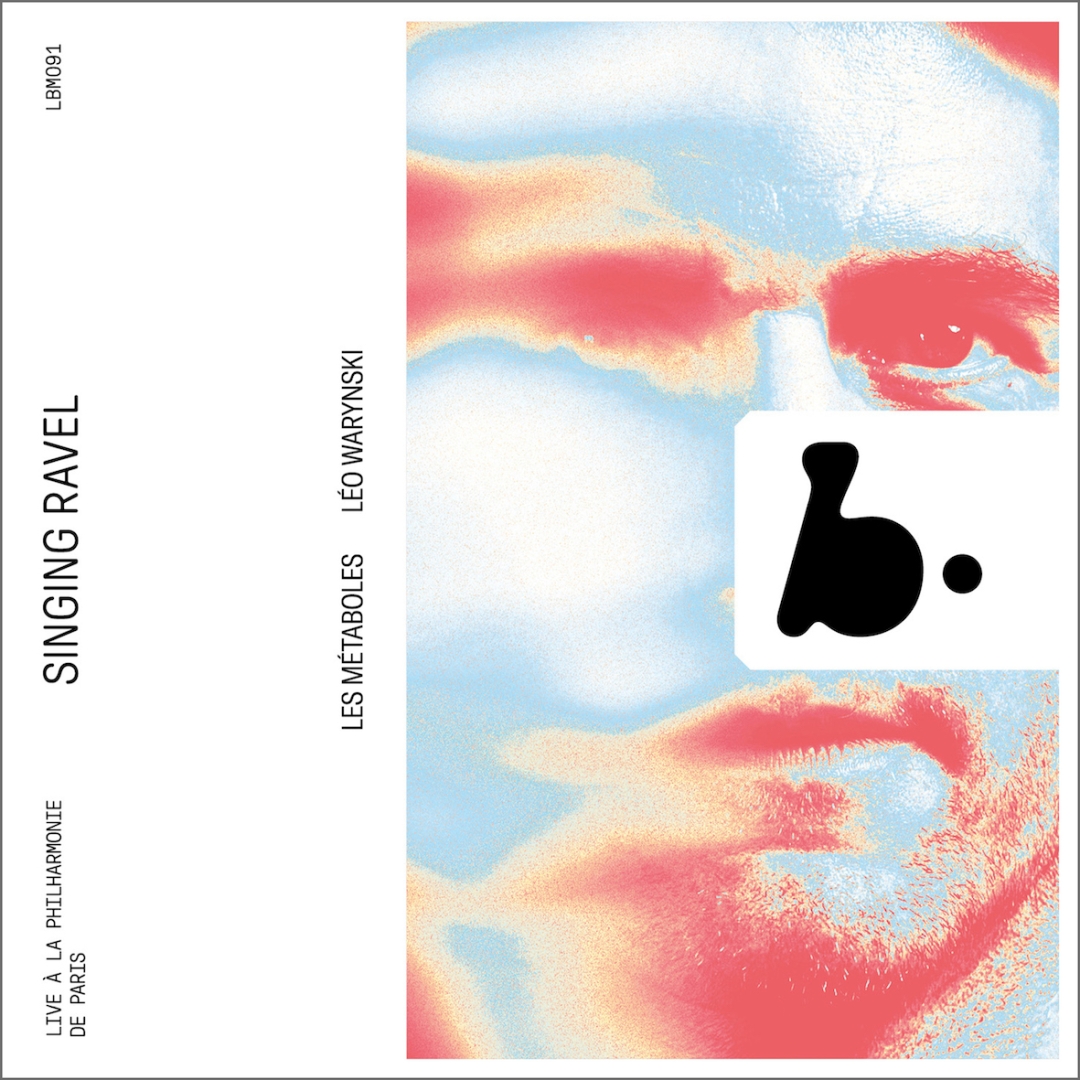
SINGING RAVEL
Maurice Ravel
1. Pavane pour une infante défunte (06’38)
Transcription de Thibault Perrine
2. Pavane de la belle au bois dormant (01’40)
Extrait de Ma mère l’Oye
Transcription de Thierry Machuel
3. Le jardin féerique (03’19)
Extrait de Ma mère l’Oye
Transcription de Thierry Machuel
4. Ronsard à son âme (02’15)
Transcription de Gérard Pesson
5. Soupir (03’39)
Extrait des Trois Poèmes de Stéphane Mallarmé
Transcription de Clytus Gottwald
6. Toi, le cœur de la rose (02’29)
Extrait de L’Enfant et les sortilèges
Transcription de Clytus Gottwald
7-9. Trois Chansons pour chœur a cappella
7. Nicolette (01’51)
8. Trois beaux oiseaux du Paradis (02’48)
9. Ronde (02’02)
10. Adieu, pastourelles ! (03’15)
Extrait de L’Enfant et les sortilèges
Transcription de Thibault Perrine
11. La vallée des cloches (05’19)
Transcription de Clytus Gottwald
12. La flûte enchantée (02’41)
Extrait de Shéhérazade
Transcription de Gérard Pesson
13. L’indifférent (03’48)
Extrait de Shéhérazade
Transcription de Gérard Pesson
14. Boléro (15’10)
Transcription de Thibault Perrine